The messages and feedback I have received have deeply affected me. Especially the idea that my trans identity is what led me to depression or pushed me towards thoughts of suicide is a great misunderstanding. The truth is that the things that made me depressed or led me to attempt suicide were not my identity, but the familial deficiencies I faced and the cruel pressures imposed on me by society. I want to elaborate on this more deeply because this is not just my issue, but a societal one.
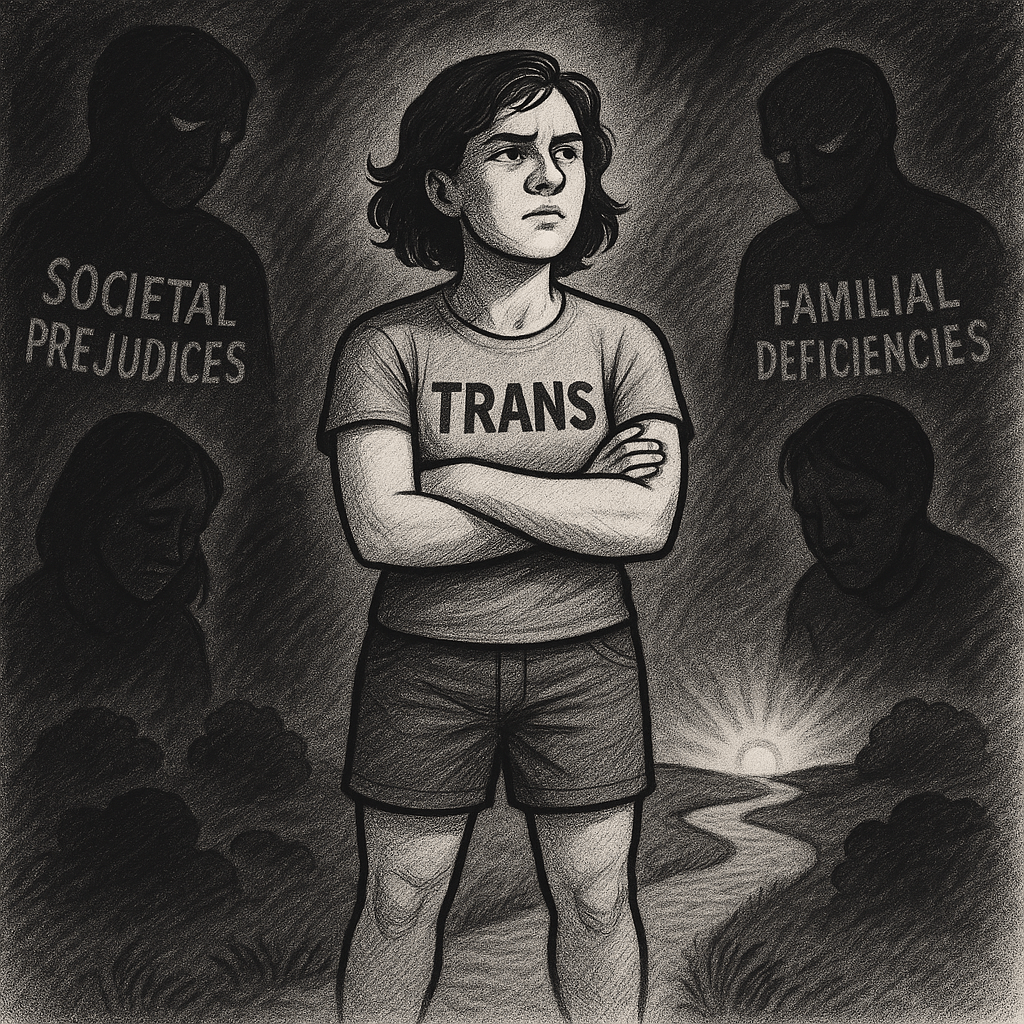
The greatest deficiency I faced was the lack of love from a mother and father. As a child, I felt the absence of the most fundamental emotional bonds a child should experience. My mother and father never instilled in me love, affection, or trust. My mother never once told me, “I love you.” She never hugged me. Throughout my life, she never spoke a single kind word to me. Instead, I grew up surrounded by constant criticism and judgment. Seeing other mothers happily walk with their children made me feel even more empty. As a child, what I needed was not just love but an affectionate, caring mother who would offer support, yet this was never present.
My father figure was no better. He was not someone who could understand me or provide me with the guidance a father should. His promises were never kept. He was timid and too weak to defend his own child’s rights. He couldn’t make sensible financial decisions for his children’s futures, and he never took advantage of opportunities that came his way. He was not someone I could have meaningful conversations with. These deficiencies created a feeling of abandonment, and these feelings of neglect were a key reason for my emotional and psychological struggles.
Additionally, one of the greatest voids in my life was the creation of an imaginary mother figure. As a child, I found myself fantasizing about the loving, supportive, and nurturing mother figure that I longed for. But this was just a fantasy, a reflection of my deep emotional needs and the lack of love I faced. During my adolescence, this need for an affectionate, reliable mother figure became even more pronounced. Imagining a loving mother who would provide warmth and protection helped me momentarily relieve my emotional pain. But the reality was that the mother I imagined never existed. The most difficult thing for a child is to have to imagine a mother figure because they couldn’t experience the love and affection they truly needed. I couldn’t experience the bond of comfort and trust that should have been there, and this left me feeling profoundly disconnected.
Suicidal thoughts came into play at this point. I felt alone and empty. My loneliness, my feeling of worthlessness, and the rejection of my identity by society contributed to these thoughts. I couldn’t find meaning in life. These thoughts were rooted in the emptiness I felt, my perceived lack of value, and the societal prejudices that denied my identity. However, during this dark period, the small spark of hope within me kept me alive. My suicidal thoughts grew stronger because of the lack of love and security I needed from my family. As a child, the greatest heartbreak is the absence of the support and love a family should provide. This emotional void can be so deep that it may drive someone to consider ending their life.
The only thing that kept me going was my deep longing for love and my hope that one day I would find that security and affection. But unfortunately, combining this deep emotional void and need for love with a society that didn’t accept my identity made everything even more difficult.
The pressures imposed on me by society, my family, and the people around me didn’t just challenge my identity, they also forced me to question my very right to exist. Under the guise of religion, nationalism, and other ideological frameworks, society used these deficiencies to their advantage. These shortcomings were weaponized under the name of society and religion, and people used them to marginalize me and others like me. Society, in trying to understand me, only focused on my identity and never understood the emotional and psychological struggles I was experiencing. The deficiencies I faced at home became part of a broader societal issue. Those who benefited from these deficiencies used them as a tool for power and control, manipulating the vulnerabilities of individuals like myself.
In order to truly understand me and people like me, you must look beyond our identities and also acknowledge the emotional wounds and traumas we live with. Because I am already trans. My identity didn’t result from these emotional deficits. However, the emotional neglect I faced from my family and society made it much more difficult for me to accept my identity and left me psychologically fragile. The foundation of all of this lies in the trauma created by deficiencies in my family. Society must accept every individual as they are and understand that the emotional pain, trauma, and voids we face have many layers.
Every argument you think is new to me, I’ve already knocked out in my mind long before you even thought of it.
—

Leave a comment