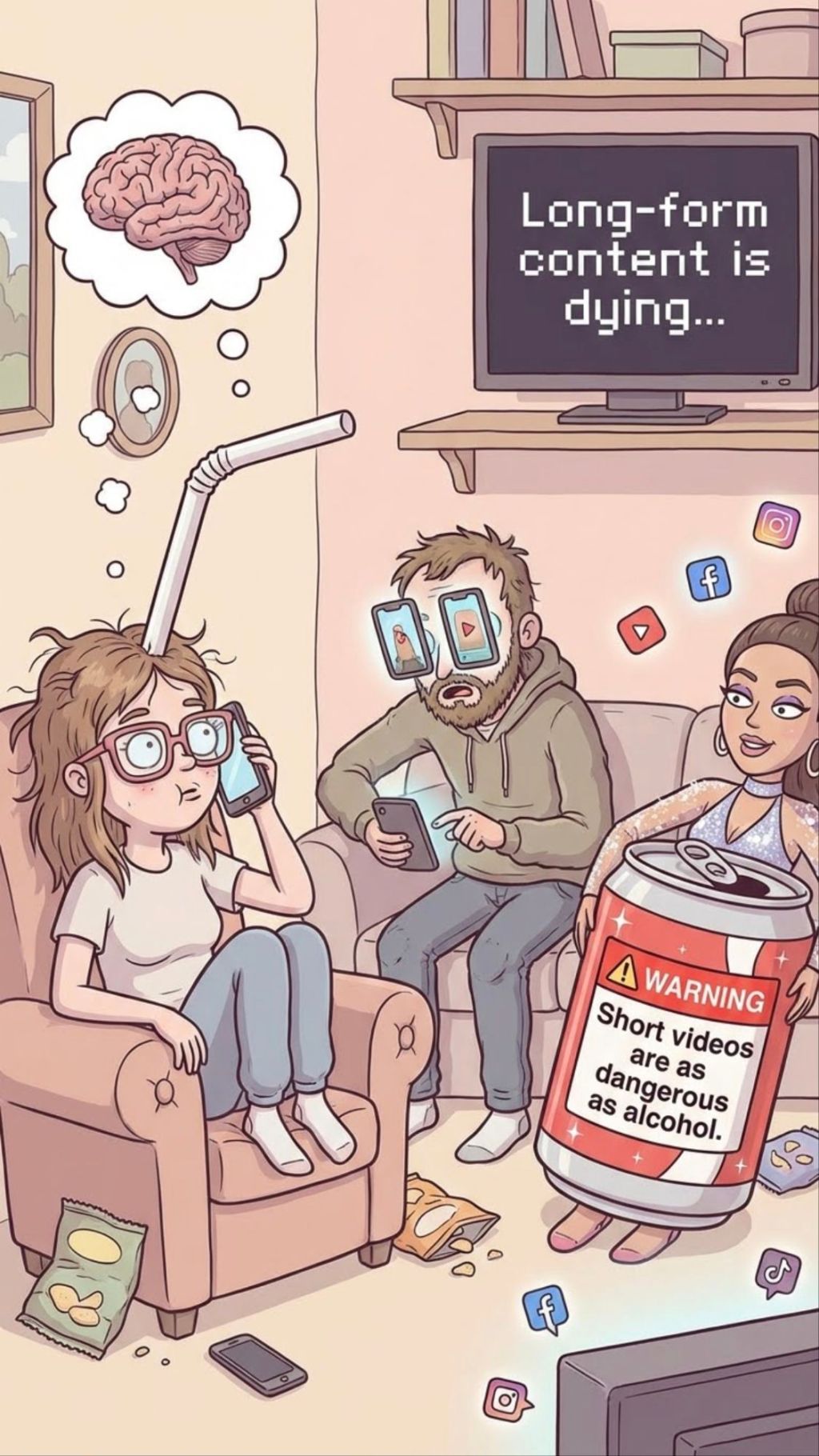
Short-form videos — YouTube Shorts, Instagram Reels, TikTok.
People call it innovation, creativity, democratized media…
Ama gerçekte?
We’re dealing with a highly engineered addiction system that rewires the human brain one swipe at a time.
And yes — the behavioral effects observed today are now considered as dangerous as alcohol in terms of dependency patterns.
1. The Collapse of Human Attention: A Historic Low Point
Before short videos, attention had room to breathe.
Now?
1.5 seconds.
A 2024 Stanford study shows the average viewer decides within 1.5 seconds whether a video is “worth it.”
That means TikTok didn’t just change media —
it deconstructed the human attention mechanism.
This is the same neural pattern seen in alcohol consumption:
quick reward → quick relief → quick craving → repeat.
2. Dopamine on Demand: TikTok as the Digital Shot Glass
Every swipe is a micro–dopamine hit.
Every micro-hit reinforces the cycle.
And every cycle increases tolerance.
According to 2025 neurocognitive research:
Short-form content consumers show a 42% drop in sustained attention
The brain develops tolerance, exactly like substance addiction
Users seek faster and more shocking content to feel the same reward
So today’s 15-second video?
Still “too slow.”
Now it’s:
Shock at second 1, connection at second 2, dopamine by second 3.
In this ecosystem, quality doesn’t win.
Speed, noise, and sensory overload do.
3. The Death of Long-Form: Cognitive Endurance is Crashing
Long videos, podcasts, essays…
People aren’t just uninterested — they can’t handle them anymore.
Oxford’s 2025 Digital Behavior Report found:
68% of heavy short-form users can’t stay focused on videos longer than 3 minutes
54% experience concentration breaks while reading
37% struggle to follow long, emotionally complex conversations
This isn’t a content trend.
It’s a population-wide cognitive regression.
A generation now struggles to hold a single idea for more than 10 seconds.
4. Emotional Consequences: Relationships Are Paying the Price
Fast entertainment creates fast expectations:
Fast info, fast pleasure, fast pace, fast boredom.
And eventually, this “speed addiction” leaks into real life.
2024 Harvard data shows:
Short-form-heavy users display 23% lower empathy levels
In-person conversations feel “too slow”
Complex emotions are harder to process
Because the brain gets used to one rule:
“Quick, or I’m bored.”
But relationships aren’t TikTok.
And this mismatch is one of the hidden roots of modern loneliness.
5. The Creator Burnout Crisis: Creativity is Suffocating
Being a creator today means one thing:
Being a hostage to speed.
The pressure looks like this:
Stay consistent every day
Stay relevant every hour
Stay shocking every second
And the results?
61% of creators report short-form induced burnout
Depth is disappearing
Style is beating substance
Algorithms outrun human creativity
In short:
The system demands more than the human mind can sustainably produce.
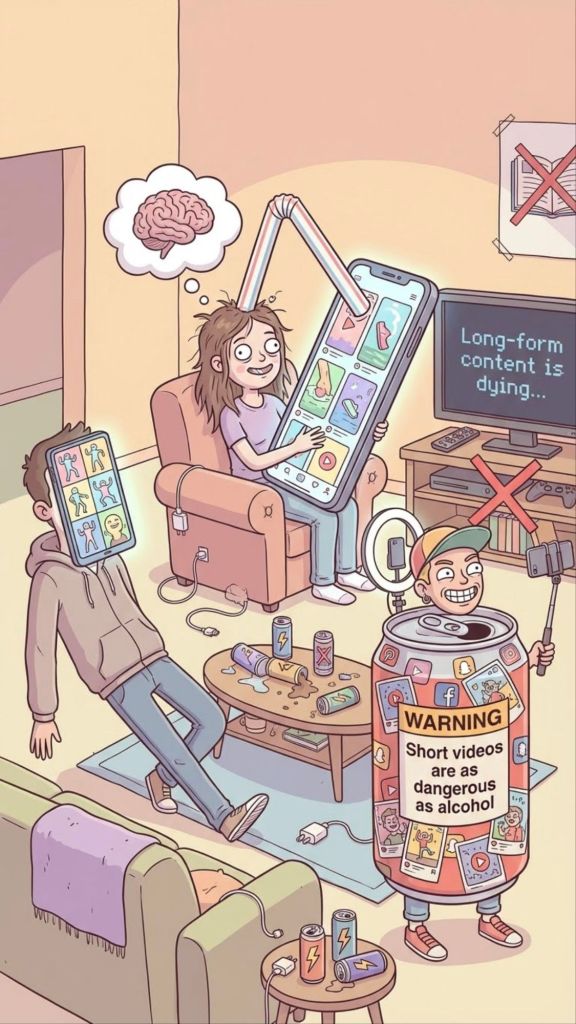
6. An Addiction Parallel to Alcohol — Confirmed by Science
Neurologically, short-form addiction mirrors alcohol dependency in three ways:
1. Rapid dopamine release
2. Tolerance build-up
3. Withdrawal symptoms
People feel anxious when separated from their phones for just a few minutes.
That’s not “habit.”
That’s classic withdrawal.
TikTok and Reels may look playful, but underneath?
They’re digital shots delivered one swipe at a time.
7. The Verdict: Short Videos Are Not a Trend — They Are a Warning
Short-form video isn’t just shaping the future of media.
It’s reshaping the future of human cognition.
Yes, it’s fun.
Yes, it’s creative.
Yes, it democratizes content.
But its impact?
As strong as alcohol, as draining as alcohol, and as dangerous as alcohol.
This isn’t just a shift in how we consume content.
It’s a shift in how we think,
how we feel,
and how we function.
And the worst part?
Most people still believe it’s “just entertainment.
“This article has been prepared by artificial intelligence within the By Artificial Intelligence category, based on academic sources. The main idea and core concept of this piece belong to me, [Açelya].”

Leave a comment